Historic Racing: Where the cars are the stars
The cars you now see racing, in what is called “Historic Racing”, come from a past era. From the 1920s you may see a Bugatti T35, or from 1992 it could be a Group A Touring car. Historic Racing in a way has something for everyone. Many of the cars you will see at the Tasman Revival meeting lead very busy lives, some race consistently in other parts of the world, others travel interstate regularly whilst many compete just inside our fair State.
The HSRCA expects there to be over 400 cars entered for the 2012 Tasman Revival meeting. One fabulous thing about Historic Racing is the ability of the spectators to be up close to the cars they see in action. Where else can you get close to a Formula One car, or a LeMans racer or a Group A Commodore and many other famous cars, all within the same pit area?
Historic Racing is the fastest growing branch of motorsport worldwide. To be eligible, a car must have competed in racing at some time during its life in the period it represents. The authenticity of each car and its racing history is checked by the Confederation of Motorsport (CAMS) and when it is confirmed that the car is true in its specifications for that period, the car is given a logbook. For cars competing from overseas, CAMS uses similar paperwork issued in the country of origin.
What makes Historic Motorsport so appealing for the competitors, is that the owner is invariably the driver of the car, and most often also prepares the car for racing. This leads to Historic competitors who are not only passionate about their car’s on-track activities, but also in keeping alive the spirit of the car with regards to its past life.
As you walk around the pits, many of the cars have a tremendous history; some even have a Formula One background. All of the owners and drivers are very knowledgeable about their cars, and enjoy talking about them, so feel free to ask any questions of them whether it be what they are like to drive, the history of the car or even how fast will it go.
Another aspect of Historic Motorsport is that there is no paid sponsorship of the cars. The cars are here because of the enthusiasm of the owners and drivers. Of all the Motorsport categories today, Historic racing is the only one that embraces this ethos.
For the motorsport enthusiast, then, Historic Racing is a smorgasbord of wonderful racing cars with the sounds, smells and activity not able to be enjoyed at modern race-meetings. There is nothing like the smell of hot oil, hot coolant and scorched brakes to enhance the visual effect.
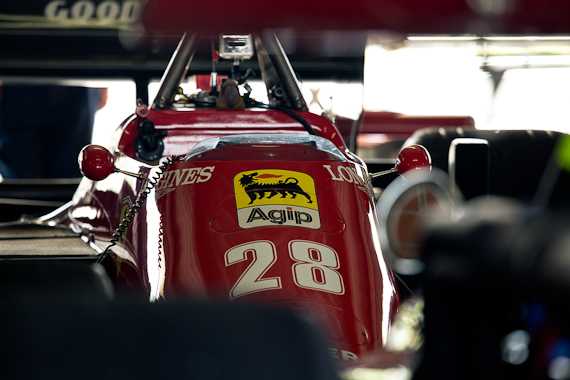
The cars depicted here are typical of their category.
The following categories will be competing at the 2012 Tasman revival meeting
GROUP Ja – Vintage Cars (PRE-1931)
This group is intended to represent the early racing and sports car development period of significant excellence in design and workmanship known as the “vintage”period.
Vehicles eligible for this group will be racing and sports cars with a competition history established prior to 31 December 1930. Consideration will also be given to individual sports cars that do not have an established competition history but are of a type that appeared in competition prior to the end of 1930.
GROUP Ka – Post-Vintage Thoroughbred Cars (1931-1940)
This group is intended to represent the pre-World War II and early post-World War II periods, which includes the classically engineered factory racing and sports cars, local specials constructed on a “one-off” basis, using production car components from the pre-war period and factory constructed vehicles that were modified with production car engines from pre-war period.
Vehicles eligible for this group will be racing and sports cars with a competition history established between 1 January 1931 and 31 December 1949, but constructed from major components manufactured prior to the end of 1940. Consideration will also be given to individual sports cars that do not have an established competition history but are of a type that appeared in competition prior to the end of 1940.
GROUP Lb – Historic Racing & Sports Cars (1941-1960)
Note: Groups J, K and L always run together in the same event.
Vehicles classified in this group will reflect the post-WorldWar II period of technology changes extending from the first of the post-war designs through an evolution culminating with the first of the mid-engined vehicles of the late 1950s.
Eligibility will be open to racing and sports cars with a competition history established in the period between 1 January 1941 and 31 December 1960, but excluding vehicles constructed from pre-1940 components which are eligible for classification in Group K.
The group will include all vehicles constructed specifically to the post-war 500cc Formula 3 even if such vehicles are constructed from pre-1946 components.
GROUP M – Historic Sports and Racing Cars (1961-1965)
This group is intended to cater for racing, sports racing and sports cars with a competition history established in the period between 1 January 1961 and 31 December 1965.
Such vehicles will reflect the development of more advanced design features such as complex space frame and monocoque structures, sophisticated adjustable suspension systems and the commencement of wide racing tyre development.
GROUP O – Historic Sports and Racing Cars (1966-1969)
This group is intended to cater for racing, sports racing and sports cars with a competition history established in the period between 1 January 1966 and 31 December 1969, excluding vehicles fitted with aerodynamic devices as defined under “specific requirements” below.
Formula Vee, Formula Ford, Sports Sedans and Formula 5000 cars are also specifically excluded from this group which is intended to reflect the development of wide treaded racing tyre technology and its effect on suspension and chassis design but stopping short of the period when external aerodynamic devices became a major design feature with a significant impact on cornering performance.
GROUP P – Historic Sports and Racing Cars (1968-1972)
This group is intended to cater for racing, sports racing and sports cars with a competition history between 1 January 1968 and 31 December 1972. It is intended to reflect both the continued development of wide treaded racing tyre technology and the emergence of embryonic external aerodynamic devices as an aid to cornering performance.
Eligible vehicles are those which competed on or after 1 January 1968 and prior to the end of 1972 and which are fitted with aerodynamic aids in the form of wings, which cannot be adjusted while the automobile is moving, and with treaded tyres in accord with the Group O approved tyre list. The use of wings which are mounted on unsprung suspension components or which are adjustable while the automobile is in motion is prohibited.
GROUP Q – Historic Sports and Racing Cars (1970-1977)
The group is intended to cater for racing, sports racing and sports cars with a competition history established in the period between 1 January 1970 and 31 December 1977, and for vehicles excluded from classification within other groups of the 5th Category because of the nature of aerodynamic devices with which they are fitted.
Formula Vee, Formula Ford, Sports Sedans and Formula 5000 cars are specifically excluded from this group, which is intended to reflect the development of aerodynamic technology as an aid to cornering performance but without extending to the period when such technology extended to the use of the vehicle under-body as an aerodynamic aid, ie, the wing car era.
FORMULA 5000 – Formula 5000 Racing Cars (pre-1978)
Factory-built Formula 5000 racing cars specifically designed to F5000 regulations and constructed before 31 December 1977; or Australian built specials, constructed specifically for F5000 and raced in F5000 events before 31 December 1977.
A clear line of history is required for any subject vehicle. Vehicles may not be constructed from spares or damaged/cast-off components (a tub or chassis does not necessarily constitute a vehicle). Owners must present vehicles in their “most significant” historical format. Only modifications compatible with the group period and to that particular vehicle will be accepted. Vehicles in this group only shall be eligible for any prize or trophy awarded for a F5000 car.
GROUP R – Historic Sports and Racing Cars (post-1977)
This group is intended to cater for racing, sports racing and clubman sports cars with a competition history established in the period between 1 January 1978, and the various end dates below shown under 1.1 Eligible vehicles.
Formula Ford racing cars with competition histories 1969-1983
GROUP A – 1984-1992
Production Touring Cars with competition histories.
GROUP C – 1973 – 1984
Production Touring Cars with competition histories.
Group V – Formula Vee Racing Cars
The group is intended to cater for Formula Vee racing cars within the various sub-groups set out below:
Va – Formula Vee Racing Cars Pre 1975
Vb – Formula Vee Racing Cars 1975 – 1985
Production Touring Cars of a type which competed in Australia between 1965-1972
Production Touring Cars of which at least 100 were produced prior to 1965.
GROUP NA – PRE 1958
Production Touring Cars commercially available in Australia prior to 1958
Production Sports Cars manufactured between 1970-1977.
Production Sports Cars manufactured between 1961-1969.
GROUP SA – 1941-1960
Production Sports Cars manufactured between 1941-1960.
GROUP V – 1965-1974
Formula Vee single-seater racing cars with a competition history between 1965 and 1974.
REGULARITY – PRE 1970
Sports, GT & Invited Cars manufactured prior 1970.